


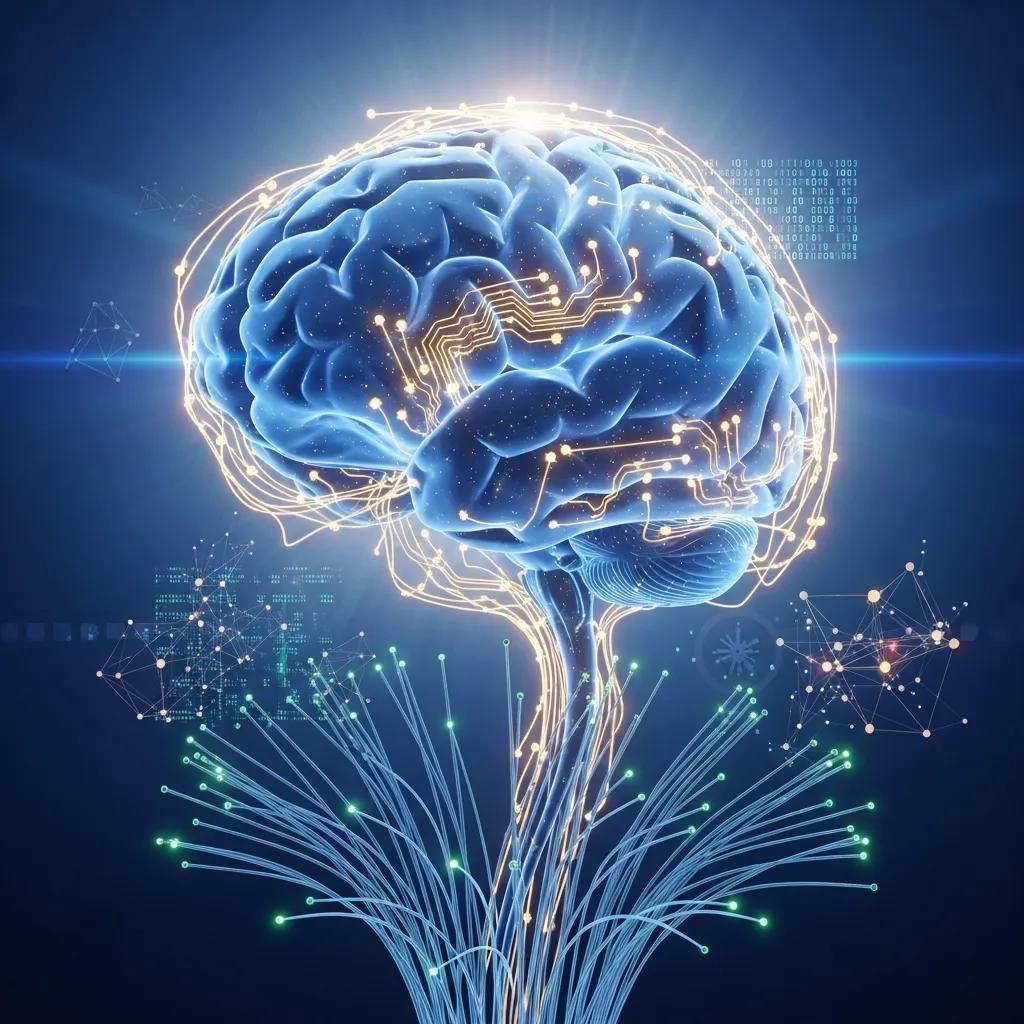
Discover Neuro-Inspired Artificial Intelligence: Principles and Business Applications for Health and Technology
Neuro-inspired artificial intelligence (AI) represents a groundbreaking intersection of neuroscience and technology, aiming to replicate the brain’s intricate processes to enhance machine learning and cognitive computing. This article delves into the core principles of neuro-inspired AI, exploring its foundational concepts, mechanisms, and the transformative applications it holds for health and technology. As the demand for intelligent systems grows, understanding how these technologies can improve personal health management and medical innovation becomes increasingly vital. We will examine the principles of neural networks, the role of neuroplasticity, and the impact of neuromorphic engineering on AI hardware. Additionally, we will explore the business applications of neuro-inspired AI in medical technology and personal health management, highlighting emerging trends and future innovations.
What Are the Core Principles of Neuro-Inspired AI and Neural Network Models?
Neuro-inspired AI is built on the principles of neural networks, which are computational models designed to simulate the way human brains process information. These models utilize interconnected nodes, or artificial neurons, to recognize patterns and make decisions based on input data. The underlying mechanism of neuro-inspired AI is its ability to learn from experience, much like the human brain, allowing for improved performance over time. This approach not only enhances machine learning capabilities but also enables the development of cognitive computing systems that can understand and respond to complex data inputs.
How Do Neural Networks and Cognitive Computing Define Neuro-Inspired AI?

Neural networks serve as the backbone of neuro-inspired AI, mimicking the structure and function of biological neural networks. Cognitive computing, on the other hand, refers to systems that can simulate human thought processes in complex situations. By integrating these two concepts, neuro-inspired AI can analyze vast amounts of data, recognize patterns, and make informed decisions. This synergy allows for advancements in various fields, including healthcare, where AI can assist in diagnostics and treatment planning.
What Role Does Neuroplasticity Play in AI Learning Models?
Neuroplasticity, the brain’s ability to reorganize itself by forming new neural connections, plays a crucial role in the development of AI learning models. By incorporating principles of neuroplasticity, AI systems can adapt and improve their performance based on new information and experiences. This adaptability is essential for creating more robust and efficient AI applications, particularly in dynamic environments where data is constantly changing. Understanding neuroplasticity’s implications for AI can lead to more effective learning algorithms that enhance cognitive computing capabilities.
This concept of adaptability is further exemplified by innovative algorithms like ANILA, which draw directly from neurobiological processes to enhance machine learning efficiency and responsiveness.
ANILA: Neuro-Inspired AI for Efficient Machine Learning & Healthcare
The Adaptive Neuro-Inspired Learning Algorithm (ANILA) offers a breakthrough in the realm of machine learning by drawing inspiration from the biological processes of the human brain. Developed to address limitations in conventional models such as CNNs and RNNs, ANILA enhances real-time responsiveness, energy efficiency, and system adaptability. By emulating neurobiological behaviors particularly sparse coding and synaptic plasticity ANILA allows systems to process data dynamically, adjust to novel inputs without retraining, and scale effectively across environments like IoT and healthcare diagnostics. Performance evaluations highlight significant reductions in latency, increases in energy efficiency (up to 92%), and exceptional adaptability to changing data streams. Despite current constraints linked to neuromorphic hardware and the interpretability of its learning processes, ANILA sets a robust foundation for the development of responsive, scalable, and sustainable AI s
ANILA: adaptive neuro-inspired learning algorithm for efficient machine learning, AI optimization, and healthcare enhancement, WN Marzoog, 2025
How Does Neuromorphic Engineering Drive Brain-Inspired Computing Hardware?
Neuromorphic engineering focuses on designing hardware that mimics the neural structure and functioning of the human brain. This innovative approach aims to create more efficient and powerful computing systems that can process information in a manner similar to biological brains. By leveraging neuromorphic principles, engineers can develop chips and architectures that significantly enhance the performance of AI applications.
What Are Neuromorphic Chips and Their Architecture?
Neuromorphic chips are specialized hardware designed to emulate the way neurons and synapses operate in the brain. These chips utilize a unique architecture that allows for parallel processing and energy-efficient computation. By mimicking the brain’s structure, neuromorphic chips can perform complex tasks more efficiently than traditional computing systems, making them ideal for applications in AI and machine learning.
Further advancing this field, research into neuromorphic chip design is exploring nano-scale architectures for applications in quantum AI robotics and advanced medical diagnostics.
Neuromorphic Chip Design for Quantum AI Robotics & Medical Diagnostics
Quantum AI robotics, driven by the convergence of quantum computing, neuromorphic engineering, and artificial intelligence, is transforming domains such as medical diagnostics, autonomous robotics, and human augmentation. Traditional computing architectures face significant limitations in scalability, energy efficiency, and real-time adaptability challenges that quantum-enhanced, nano-scale neuromorphic systems are uniquely positioned to address. This study investigates the emerging role of nano-scale architectures in Quantum AI robotics by synthesizing recent developments in neuromorphic chip design, advanced diagnostic instrumentation, and cybernetic interfaces, using a structured literature review methodology guided by PRISMA protocols to identify and analyze peer-reviewed publications from 2018 to 2025 across databases such as IEEE Xplore, ScienceDirect, and SpringerLink. Key findings reveal that memristor-based crossbars, 3D-stacked neuromorphic chips, and quantum-a
NANO-SCALE ARCHITECTURES FOR QUANTUM AI ROBOTICS: A REVIEW OF EMERGING TRENDS IN NEUROMORPHIC CHIP DESIGN, ADVANCED MEDICAL …, 2025
How Does Neuromorphic Engineering Influence AI Hardware Development?
The influence of neuromorphic engineering on AI hardware development is profound, as it paves the way for creating systems that can learn and adapt in real-time. By integrating neuromorphic principles into AI hardware, developers can enhance the speed and efficiency of data processing, leading to more responsive and intelligent systems. This advancement is particularly beneficial in fields such as healthcare, where timely data analysis can significantly impact patient outcomes.
What Are the Business Applications of Neuro-Inspired AI in Medical Technology?
Neuro-inspired AI has numerous applications in medical technology, revolutionizing how healthcare providers diagnose and treat patients. By leveraging cognitive computing and neural network models, healthcare solutions can become more accurate and efficient, ultimately improving patient care.
How Is Cognitive Computing Applied in Healthcare Solutions?
Cognitive computing is applied in healthcare through various solutions, including diagnostic tools, personalized treatment plans, and patient monitoring systems. These applications utilize AI algorithms to analyze patient data, identify patterns, and provide actionable insights. For instance, AI-driven diagnostic tools can assist physicians in detecting diseases at earlier stages, leading to more effective treatment options.
Which Case Studies Demonstrate Neuro-Inspired AI Benefits in Medical Innovation?
Several case studies highlight the benefits of neuro-inspired AI in medical innovation. For example, AI systems have been successfully implemented in radiology to enhance image analysis, resulting in faster and more accurate diagnoses. Additionally, AI-driven predictive analytics tools have shown promise in identifying patients at risk of developing chronic conditions, allowing for proactive interventions. These case studies demonstrate the transformative potential of neuro-inspired AI in improving healthcare outcomes.
How Can Neuro-Inspired AI Enhance Personal Health Management?
Neuro-inspired AI can significantly enhance personal health management by providing individuals with tools to monitor and improve their health. Through the integration of AI technologies, users can gain insights into their health behaviors and make informed decisions.
What Are Brain-Computer Interfaces and Their Health Monitoring Benefits?

Brain-computer interfaces (BCIs) are systems that enable direct communication between the brain and external devices. These interfaces can be used for health monitoring by tracking brain activity and providing real-time feedback to users. BCIs have the potential to assist individuals with neurological disorders, enabling them to control devices or communicate more effectively. The health monitoring benefits of BCIs can lead to improved quality of life for users.
How Do AI Tools Empower Individuals in Managing Their Health?
AI tools empower individuals by providing personalized health insights and recommendations. These tools can analyze data from wearable devices, health apps, and medical records to offer tailored advice on lifestyle changes, medication adherence, and preventive care. By leveraging AI technologies, individuals can take a more active role in managing their health, leading to better outcomes and enhanced well-being.
What Are the Emerging Trends and Future Innovations in Neuro-Inspired AI?
The field of neuro-inspired AI is rapidly evolving, with emerging trends and innovations shaping its future. As research continues to advance, new applications and technologies are expected to emerge, further enhancing the capabilities of AI systems.
How Will Neuromorphic Chip Market Growth Impact Healthcare by 2028?
The growth of the neuromorphic chip market is anticipated to have a significant impact on healthcare by 2028. As these chips become more widely adopted, they will enable faster and more efficient data processing, leading to improved AI applications in diagnostics, treatment planning, and patient monitoring. This advancement will ultimately enhance the quality of care provided to patients and streamline healthcare operations.
What Recent Research Advances Are Shaping Neuro-Inspired AI?
Recent research advances have focused on improving the algorithms and architectures used in neuro-inspired AI systems. These advancements aim to enhance the learning capabilities of AI models, making them more adaptable and efficient. As researchers continue to explore the intersection of neuroscience and technology, the potential for innovative applications in healthcare and beyond will expand.
What Common Questions Do People Ask About Neuro-Inspired AI and Its Applications?
Neuro-inspired AI raises several common questions regarding its functionality and applications. Understanding these concepts is essential for individuals interested in the potential of this technology.
What Is Neuro-Inspired AI and How Does Neuromorphic Computing Work?
Neuro-inspired AI refers to systems designed to mimic the cognitive processes of the human brain, utilizing neural networks and cognitive computing principles. Neuromorphic computing involves creating hardware that replicates the brain’s architecture, allowing for efficient data processing and learning. Together, these technologies enable the development of intelligent systems capable of complex decision-making and problem-solving.
How Is AI Used in Healthcare and What Are Neuromorphic Chips?
AI is used in healthcare to enhance diagnostics, treatment planning, and patient monitoring. Neuromorphic chips play a crucial role in this process by providing the necessary hardware to support advanced AI algorithms. These chips enable faster data processing and more efficient learning, ultimately improving the effectiveness of AI applications in the medical field.